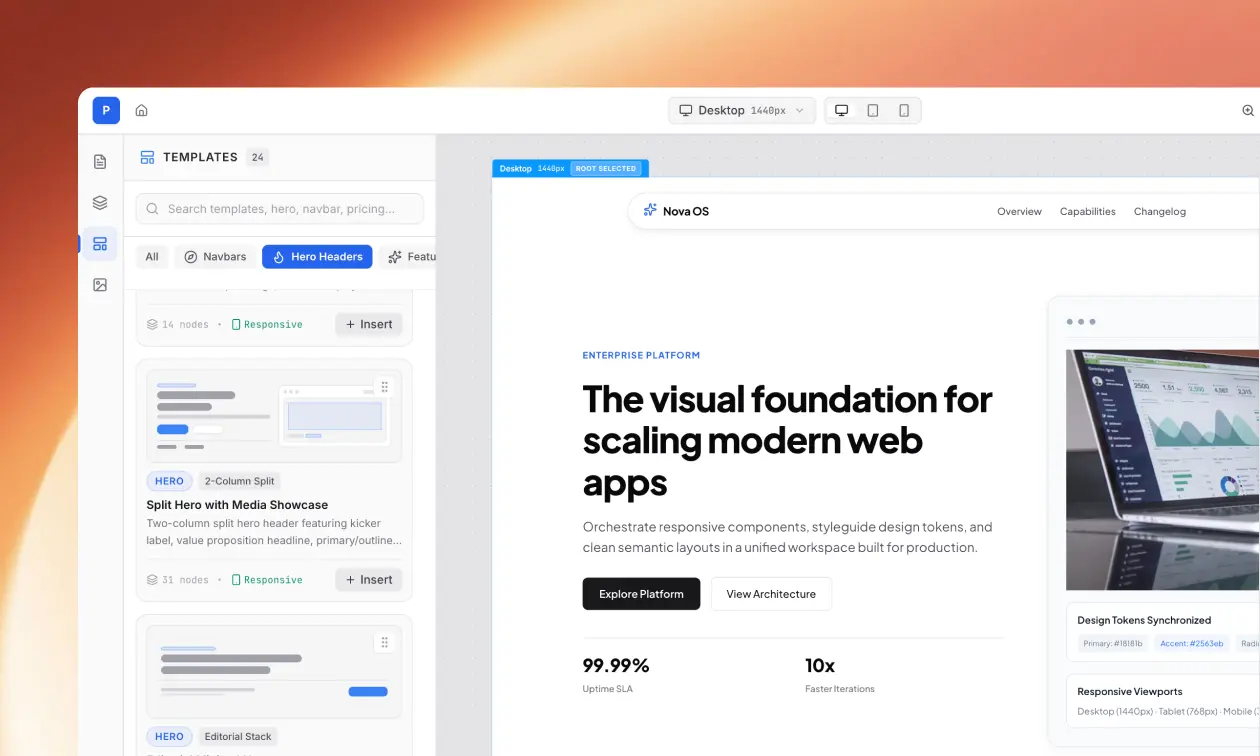
A visual website builder for creating and editing web pages without writing code.
Product direction · AI-assisted development
[ B2B · Developer tool · Personal project · Beta ]
Product direction, product design, UX and UI, information architecture, schema design, technical decisions, WordPress plugin development, admin interface, REST APIs, authentication, webhooks, licensing, documentation, and AI-assisted implementation.
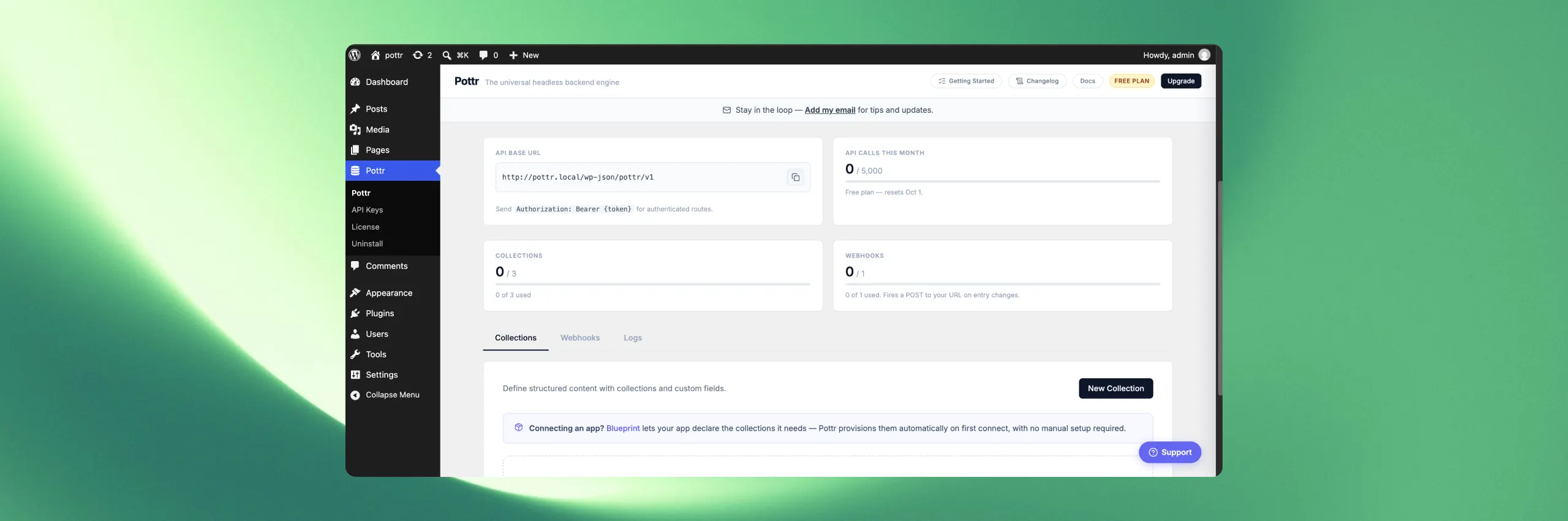
Pottr is a WordPress plugin that turns WordPress into a structured backend for web applications. It provides collections, typed fields, relations, REST APIs, optional app-user authentication, webhooks, API keys, and administrative tooling inside WordPress.
I built Pottr as a one-person product project, working across product strategy, UX, UI, technical decisions, and AI-assisted implementation to explore how WordPress could support application-oriented data without requiring a separate backend service.
The goal was to explore whether WordPress could support application-oriented data through a more structured and predictable backend layer.
Pottr was built around a simple progression: Schema → Types → Relations → APIs → UI → Templates. The intention was to make the underlying model consistent across the product, so that defining data, managing it, and consuming it through an application all followed the same logic.
Pottr was designed and built as one continuous product process rather than as a traditional design-to-development handoff. I defined the product model, shaped the user experience, made architectural decisions, implemented the WordPress plugin and admin interface, and used AI-assisted development to explore, generate, debug, and refine the implementation.
Building Pottr changed how I think about product design in infrastructure-heavy products. The challenge was not only to make the interface clear, but to decide which concepts should exist, which behaviors should be constrained, and how the system should communicate its boundaries. Pottr is currently a beta-ready product, with the next stage focused on using it with real applications and learning which parts need to become simpler, more robust, or more broadly useful.
A few things shaped through design, experimentation, and the process of making them real.
A visual website builder for creating and editing web pages without writing code.
Product direction · AI-assisted development
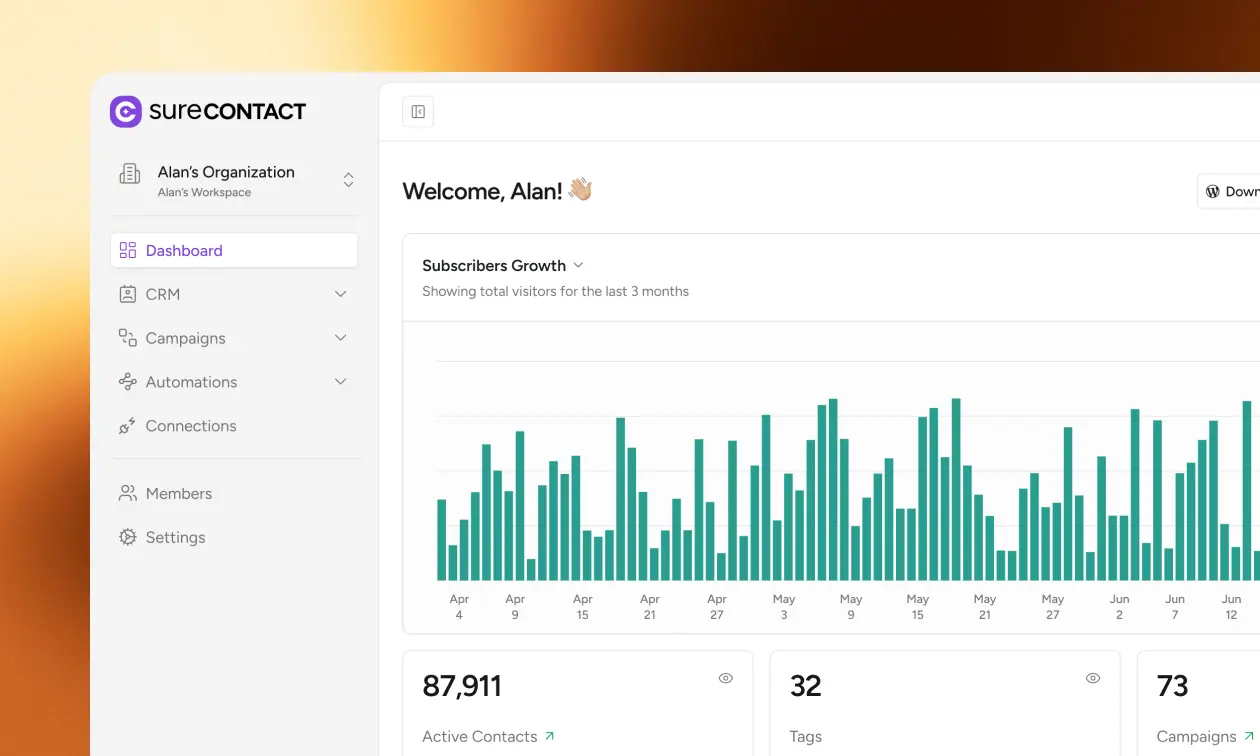
An email marketing platform and lightweight CRM designed around simplicity, speed, and usability.
Product designer · AI-assisted implementation